


Eastern Longhunter Belt Axe
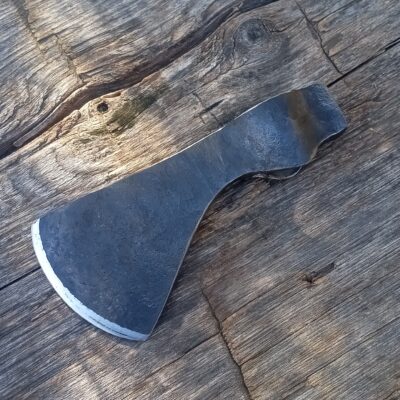
Forged by hand from solid 4140 Steel, hardened and tempered with a 3 inch edge.
18″ Hand scraped ,Oiled and aged PREMIUM HICKORY wood handle.
In the mid-1700s, a man’s life often hung on the balance of his belt. Among the “Longhunters”—men like Daniel Boone who vanished into the Kentucky wilderness for years at a time—the heavy European felling axe was a burden. They needed something lighter, smaller..
The origin of the Longhunter’s axe is a story of collision. It was born from the French “Biscayne” trade hatchet and the British naval boarding axe. Reshaped by the practical demands of the American frontier.
Unlike the massive axes used to clear forests, the Eastern Longhunters belt axe was forged light, weighing barely over a pound. It featured a swept blade for cutting, chopping and a hardened poll (the back of the head) for driving tent stakes or crushing bone. Blacksmiths in Pennsylvania and Virginia refined the design, tapering the eye so a hunter could easily replace a broken handle with a hand-carved piece of hickory or other hardwood found in the woods.
To a Longhunter, this tool was “the third hand.” While the longrifle provided food and the scalping knife provided protection, the belt axe provided everything else: it sparked flint for fire, butchered elk, and notched the logs for a “station” or makeshift shelter.
By the time the Revolutionary War bled into the frontier, the belt axe had become a symbol of the American woodsman—a hybrid tool that was part weapon, part carpenter’s kit, and entirely essential for surviving a world where the nearest trading post was five hundred miles of wilderness away.
Michael Legear (verified owner) –
The axe is well crafted and shipping was fast . I will be doing business again